Clean cooking in Rwanda: from market to school kitchen
Three AESG assignments in Rwanda: bringing clean cooking companies into a national programme, designing a household pilot, and supervising school kitchens.
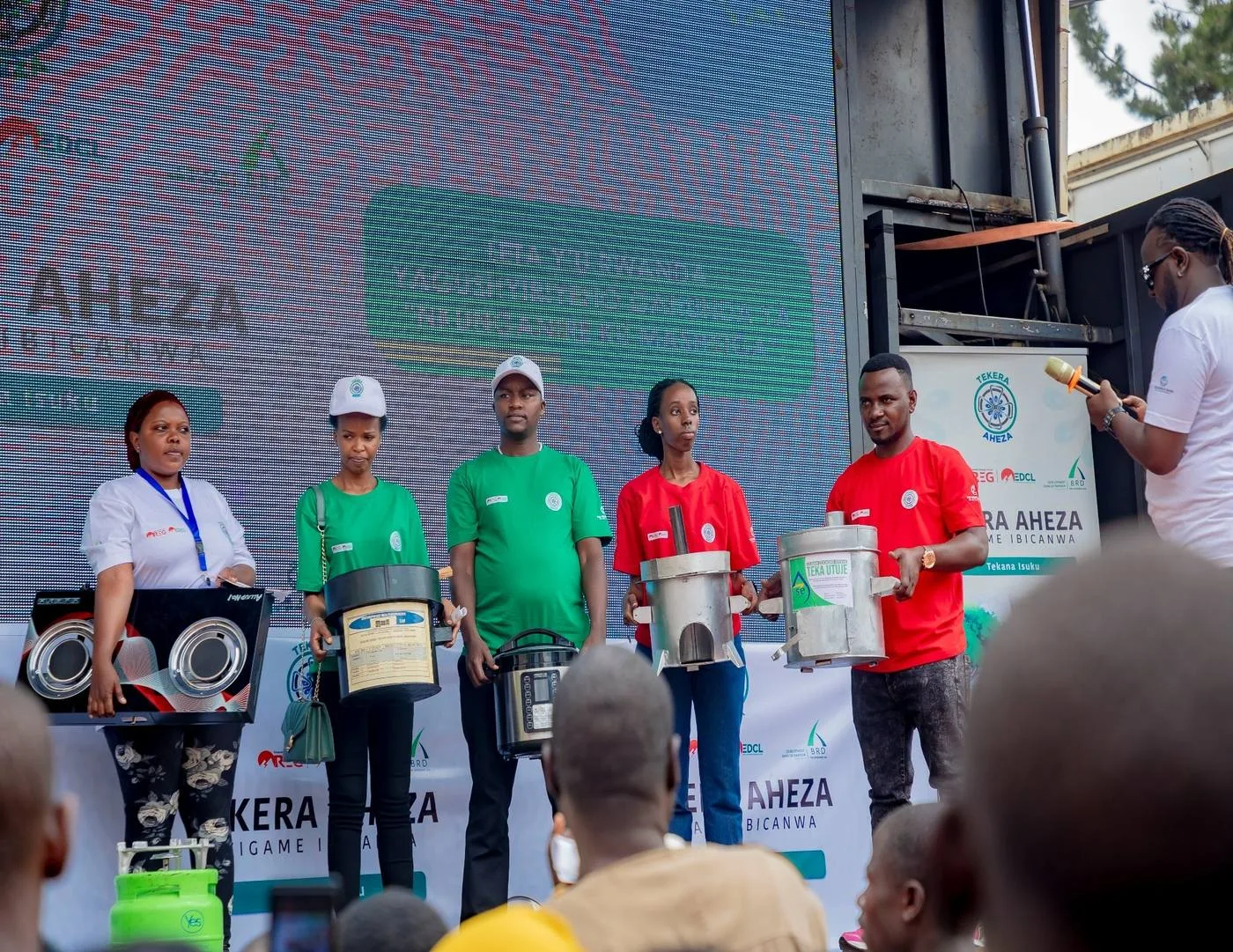
Most Rwandan households have relied on wood and other biomass for cooking. Moving them to cleaner stoves and fuels takes more than a better stove: companies need a market they can reach, households need options they can afford, and institutions need systems that run safely every day. AESG has worked on each of those links.
Building the market
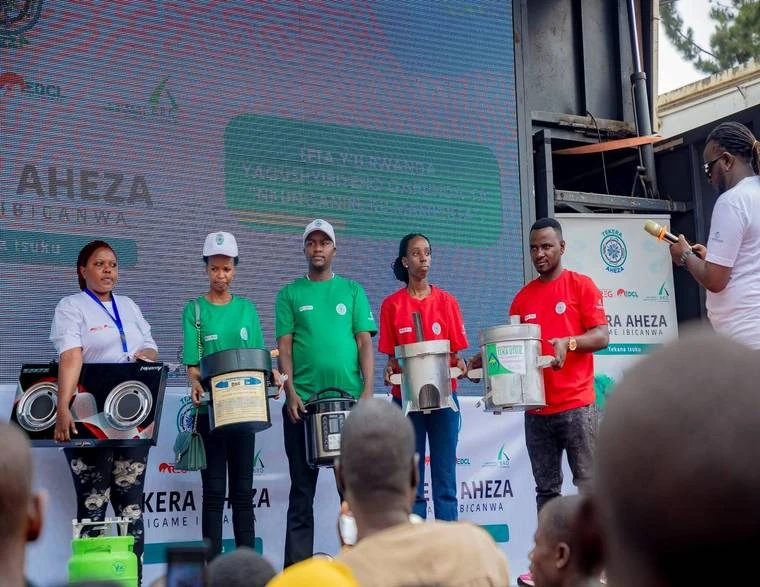
As market facilitator for Energy Development Corporation Limited (EDCL) and the Rwanda Development Bank, in a World Bank-funded programme, AESG engaged and supported clean cooking companies to take part in Rwanda's Results Based Financing (RBF) programme. The work had three parts:
- Data collection and market research, including baseline data on women entrepreneurs in the stove business.
- Capacity building: skills assessment, training, partnership formation, and coordination with EnDev, SNV and MECS.
- Market development: RBF compliance support, cooking demonstrations, market segmentation, monitoring and evaluation, and linking marketing groups with customer groups through EDCL's provincial representatives.
The programme's aims set the scale: contributing to Rwanda's universal access target under SDG7, reducing household reliance on wood and biomass from 83% to 42%, and bringing clean cooking solutions to 500,000 households by 2026.
Designing for the poorest households
In July and August 2025, for Concern Worldwide, AESG led a market assessment of demand, supply and market dynamics for clean cooking in two southern districts, followed by the design of a pilot programme. The assessment combined a desk review of the Biomass Energy Strategy, the clean cooking results-based financing programme, SE4ALL and Vision 2050 with 15 to 20 key informant interviews, four focus group discussions with vulnerable groups and more than 100 household surveys, disaggregated by gender, income and location.
It assessed supply chains, pricing and after-sales service for improved cookstoves, LPG, electric pressure cookers, briquettes and pellets, and reviewed financing through pay-as-you-go, microfinance, subsidies, results-based and carbon finance, with specific attention to ultra-poor households. The pilot design covers 150 households in Nyaruguru, combining several technologies and financing models with behaviour change communication and income-generating activities in stove production, fuel retailing and repair.
Kitchens that feed schools
Since December 2025, AESG has been the supervising firm for the Government of Rwanda, through EDCL, on clean institutional cooking systems in 35 boarding schools. AESG reviews and validates technical designs before implementation; verifies each item of equipment supplied against the approved specifications, quantities and delivery schedules; and oversees the installation of kitchen equipment, LPG piping, electrical wiring and safety mechanisms against engineering drawings and safety standards.
Contractors are monitored against their obligations and timelines through regular site inspections; testing and commissioning are supervised so that systems run safely and efficiently before handover; and safety, environmental and social compliance is verified continuously against national regulations. Alongside, AESG is developing a feasibility analysis for scaling up to more schools.
One chain
Each assignment answers a different question: can companies reach customers, what can poor households adopt, and do institutional systems work safely. Together they run from market to kitchen. The full entries are in our project record: market facilitation, the market assessment and pilot design and the school kitchens.