Clean cooking assessment: what 100 households told us
How AESG built a clean cooking market assessment and a 150-household pilot design for Concern Worldwide in Rwanda from household and community evidence.
In July and August 2025 AESG led a clean cooking market assessment and pilot design for Concern Worldwide in Rwanda. The assignment asked a practical question: what do households in two districts actually need and use, and what pilot would fit them? This article sets out how the evidence was gathered and why it matters before money is committed.
Why start with households
Clean cooking remains a gap in Rwanda. Only 9.3% of the population had access to clean cooking in 2023 (World Bank WDI, 2023). In rural areas the figure was 1.0% (World Bank WDI, 2023), against 38.9% in urban areas (World Bank WDI, 2023).
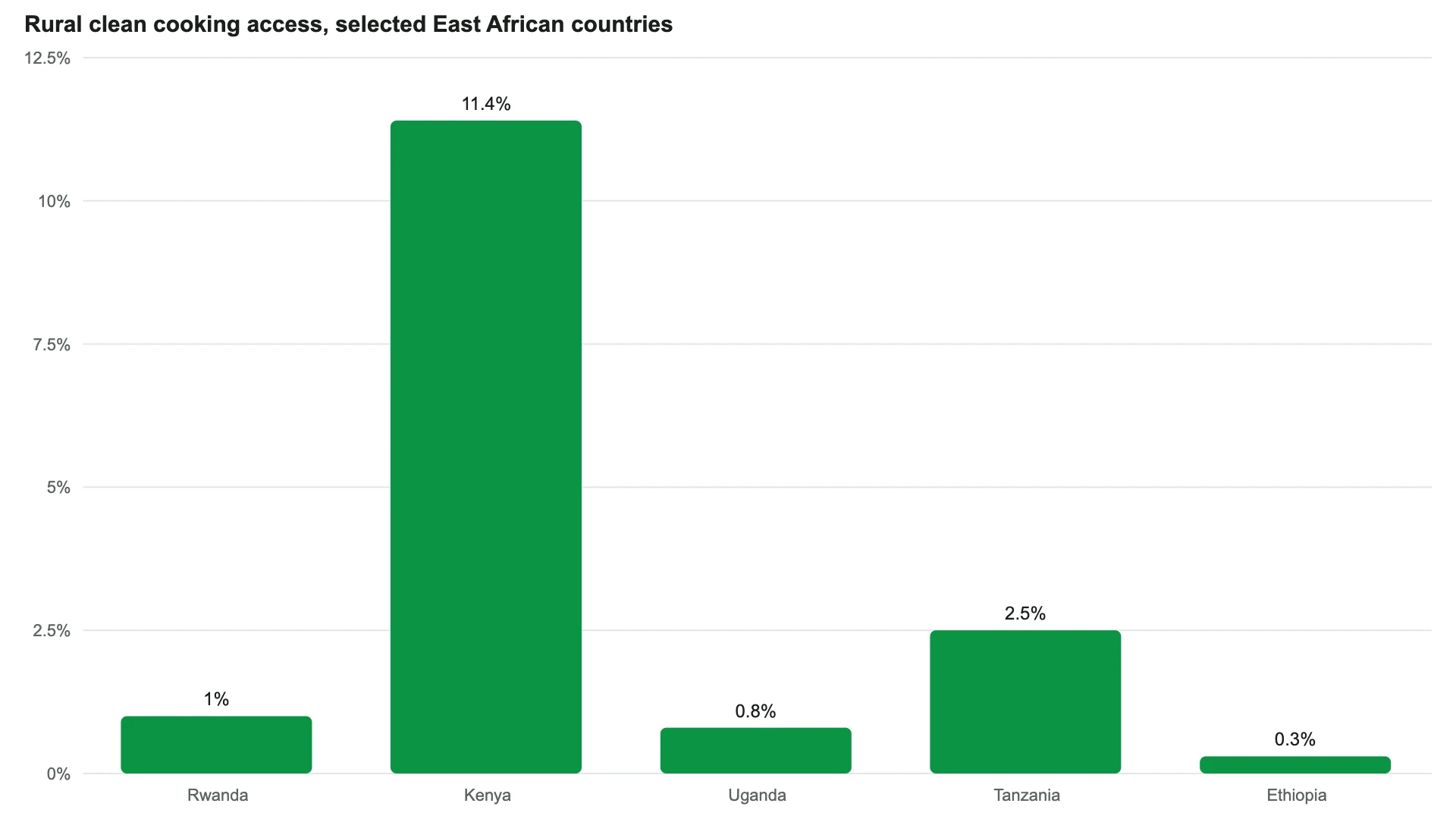
Rural access in Rwanda (1%) sits close to Uganda (0.8%) and Ethiopia (0.3%) and well below Kenya (11.4%) (World Bank WDI, 2023). With so few rural households using clean fuels, national averages say little about why. A pilot needs local answers on price, habits, who decides and who cooks.
How the assessment was built
The work was carried out in Nyaruguru and Gisagara districts. AESG acted as lead company and combined three sources of evidence:
- More than 100 household surveys, to measure current fuels, spending and openness to alternatives.
- Between 15 and 20 key informant interviews, to understand supply, institutions and local conditions.
- Four focus group discussions, to explore the reasons behind household choices, including gender roles in the kitchen.
Each source covers a weakness in the others. Surveys give comparable numbers but little explanation. Interviews show what suppliers and officials can deliver. Focus groups bring out the reasons households give for their choices.
From evidence to a pilot design
The findings fed directly into the design of a pilot for 150 households. The design followed the assessment rather than preceding it. That order matters because pilots elsewhere in Rwanda have shown how product fit can decide results. In a published eCooking assessment, pilot participants found one cooking pot insufficient for a rural household and an appliance with Chinese-language instructions hard to use. Those are demand-side lessons that a market survey can surface early.
What this offers ministries and NGOs
For a ministry, utility or NGO, a short assessment of this kind does three things before funds are committed:
- It tests assumptions about demand in the specific places where a pilot will run.
- It shapes the pilot's size, target households and technology choices around what people report.
- It gives funders a clearer basis for deciding whether a pilot is worth backing.
The assignment ran from July to August 2025. The scale was modest, but it was enough to give a pilot design a grounding in local evidence.
Related work
AESG's other clean cooking engagements in Rwanda include market facilitation for clean cooking technologies and the supervision of clean institutional cooking systems in schools. The assessment is described on the Concern Worldwide project page. Our research and advisory teams support governments and partners that want evidence of this kind before a pilot.